
The 32nd Sabbath Gate Mystery: The Teacher, the Student, and the Sabbath


Lamed — Part III: The Mystery of Instruction
Opening the 32nd Sabbath Gate — From Strength to Understanding
Lamed + Beth — The Instruction and the House of Yahweh
As we enter the 32nd Sabbath Gate, we continue our journey through the mysteries of Lamed, the Hebrew letter with a numerical value of 30. At the 30th Sabbath Gate, we began by examining the relationship between teacher and student and discovered that instruction is more than something we hear. It is designed to produce knowledge, understanding, and spiritual maturity. We learned that those who desire to teach must remain students because, no matter how much knowledge we have acquired, the Word of Yahweh always has more to discover.
At the 31st Sabbath Gate, we added Aleph, whose numerical value is 1, bringing us to 31. Through the ancient pictographic association of Aleph with the ox, we explored the symbolism of strength and the mental fortitude necessary to carry responsibility. We examined the staff as an instrument of guidance, the shepherd as one entrusted with the responsibility of guiding others, and the calling that requires preparation before leadership. We discovered that the strength to carry the staff is measured not only by the power of the hand but also by the stability of the mind, the condition of the heart, and the willingness to remain faithful to Yahweh’s instruction.
Now, as we enter the 32nd Sabbath Gate, another Hebrew letter is added to our exploration. Lamed, whose numerical value is 30, is now joined by Beth, whose numerical value is 2, bringing us to 32. This introduces another dimension of the mystery because Beth is associated with the house, household, family, and dwelling place. Here, Lamed introduces the relationship between the teacher and the student. In this relationship of teaching and learning, Beth invites us to examine the place of belonging, the meaning of dwelling, and the relationship between Yahweh and His people.
This numerical combination provides a symbolic framework for our study of the two letters. It leads us toward an important biblical question:
What does it mean to belong to the House of Yahweh?
Is His house simply a physical structure, a mansion world in the sky, or is there something more? Does Scripture reveal a deeper relationship involving His presence, His Covenant, His name, and the people who belong to Him?
Before we can answer that question, however, we must return to Lamed and examine the purpose of instruction itself. Yahweh is the Divine Instructor, but what does that mean? What is instruction intended to accomplish? If we are His students, what are we supposed to learn from His instructions?
These questions matter even more when we consider the Sabbath. Yahweh did not simply command His people to observe the seventh day without revealing its significance. He identified the Sabbath as a sign between Himself and His people, declaring that through it they were to know Him as the One who sanctifies them. Therefore, the Sabbath is more than an appointed time for rest or an occasion for receiving instruction. The Sabbath is an instruction through which Yahweh teaches His people something about who He is, what it means to belong to Him, and the covenant relationship He has established with them.
We will begin exploring this mystery at the 32nd Sabbath Gate. Lamed introduces the Teacher and the student. Beth introduces the house and the household. The Sabbath brings us to an examination of the instruction that identifies the covenant relationship between Yahweh and His people.
Yahweh — The Divine Instructor: The One Who Teaches Us

When we speak of Yahweh as the Divine Instructor, we must first understand what instruction means. We have used the word “instruction” throughout our exploration of Lamed, but now we must examine it more deeply because the purpose of this Sabbath Gate is not simply to repeat that Yahweh gives instructions. It is to understand what happens when the Instructor teaches and what the student is expected to gain from that teaching.
Instruction is the communication of knowledge, guidance, or direction intended to help someone learn, understand, and act. To instruct is to teach, explain, train, or guide someone toward a particular understanding or purpose.
An instruction may tell a person:
What to do
Teaching also helps that person understand why the action matters
What it is intended to accomplish
How the knowledge gained should influence future decisions
Think about the contrast between instructing someone to do something and helping them grasp the meaning behind how and why they are doing it.
A person may follow directions because they have been told what to do yet remain unaware of the reason behind those directions.
But when the person begins to understand the purpose of the instruction, learning reaches another level. The student is no longer simply repeating an action. The student begins to recognize the knowledge, reasoning, and intended outcome behind what has been taught.
This distinction matters because instruction is meant to produce understanding, not just outward compliance. Obedience is important, but Yahweh’s Word also repeatedly calls His people to seek wisdom, gain understanding, remember His works, and recognize His ways. A student who obeys without understanding may fulfill an outward requirement. Still, a student who continues seeking knowledge can develop a deeper appreciation for the instruction and the One who gave it.
The Hebrew root lamad (H3925), associated with Lamed, carries the meanings of learning, teaching, and being trained.
Through this relationship, we recognize that teaching and learning are connected activities. The teacher communicates knowledge while the student receives and develops understanding.
But instruction is not complete just because words have been spoken. The student must pay attention to what is being communicated and be willing to examine how that knowledge should shape how they live.
Now consider what this means when Yahweh is the Instructor. Yahweh is not simply communicating rules from a distant place, revealing nothing about Himself. Through His Word, His Works, His Commandments, and His Covenant, He teaches His people about His character, His authority, His faithfulness, and the relationship He has established with them. His instruction reveals more than what He requires. It also reveals what He desires His people to know.
Isaiah 48:17 declares,
“Thus saith Yahweh, thy Redeemer, the Holy One of Israel; I am Yahweh thy God which teacheth thee to profit, which leadeth thee by the way that thou shouldest go.”
Notice the relationship between teaching and leading. Yahweh identifies Himself as the One who teaches His people what is beneficial and leads them in the way they should walk. The instruction is therefore connected to direction. Yahweh’s knowledge is intended to guide the student’s path.
This brings us back to the staff and the shepherd from the 31st Sabbath Gate. We learned that the staff represents guidance, but the shepherd must understand the direction in which the flock should travel. Now, we examine the One who sets the direction. Yahweh is the Shepherd and the Divine Instructor because He is the source of the instruction that teaches His people how to walk. Those who receive instruction must learn to recognize His authority.
Psalm 25:4–5 expresses this relationship through the prayer,
“Shew me thy ways, O Yahweh; teach me thy paths. Lead me in thy truth, and teach me: for thou art the God of my salvation; on thee do I wait all the day.”
The psalmist does not simply ask to be told what to do. He asks to be shown Yahweh’s ways, taught His paths, and led in His truth. This reveals a desire for understanding that reaches beyond the memorization of commandments. The student wants to recognize the path and learn how to walk faithfully within it.
There is something particularly meaningful about the words “Shew me thy ways.” The psalmist desires to see and understand something that is not yet completely clear. This introduces an important relationship between instruction and recognition. When a teacher explains something that was previously misunderstood, the student may respond by saying,
“Oh, I see.”
The student may not be talking about actual vision with the eyes. The expression means understanding has developed, and something previously unclear has become recognizable.
This is the kind of learning we must examine within the 32nd Sabbath Gate. Yahweh teaches us because he desires that we come to know and understand what He is revealing. Through instruction, the student learns to recognize the meaning behind what has been commanded and the relationship between the instruction and the One who gave it.
Psalm 32:8 provides another meaningful declaration:
“I will instruct thee and teach thee in the way which thou shalt go: I will guide thee with mine eye.”
Here, instruction, teaching, and guidance are brought together. The promise is a language that emphasizes guidance as something to be followed. This reinforces the relationship we have been developing through Lamed:
Yahweh the Teacher instructs so that we can gain understanding and learn to walk according to what has been taught.
But Yahweh’s instruction also reveals something about His relationship with His people. When He teaches them His ways, He is communicating the principles by which they are to live as a people belonging to Him. His instruction establishes expectations, identifies responsibilities, and reveals the character of the relationship He has formed with them.
This becomes especially important when we consider the Covenant. A covenant is more than a statement that two parties know about one another. It establishes a relationship involving commitments, responsibilities, and promises. Yahweh’s instruction teaches us what it means to live within that relationship. He identifies Himself as God, calls us His people, and shows us how to walk.
Yet we must not rush past these words.
What does it mean when Yahweh declares, “I am Yahweh your God”?
What does it mean to belong to Him?
What does it mean to live as His people, receive His instruction, and recognize His presence among them?
These are not arbitrary questions we can answer simply by repeating religious expressions. They require us to examine what Scripture reveals about Yahweh as Creator, Deliverer, Provider, Lawgiver, and the One who sanctifies His people.
And this is where Beth will become especially meaningful as our study continues. The lesson here is that Beth, the house, is not simply a purposeless structure. It is a household that involves belonging, identity, relationships, and responsibilities.
When Scripture speaks of Yahweh dwelling among His people, it describes a relationship that goes beyond the physical presence of a building, city, or country. It invites us to examine what it means for Yahweh to establish His presence among a people who belong to Him, who are called to walk according to His instruction.
But before we enter that deeper examination of the house and the dwelling, we must first understand the responsibility of the student. If Yahweh is the Divine Instructor, then we must learn how to receive His teaching. The Teacher may communicate the instruction, but the student must listen, examine, understand, and apply what has been revealed.
We Are the Students — Learning to See, Recognize, and Understand
We Are His People and the Sheep of His Pasture
Yahweh is the Divine Instructor, and we must recognize our position as students. This means that our understanding must remain open to further instruction. No matter how much we have studied, how many Scriptures we have examined, or how long we have walked in the ways of Yahweh, we still have an opportunity to grow in wisdom, knowledge, and understanding.
One of the greatest obstacles to learning is the belief that we already understand everything that needs to be known. When a student becomes convinced that no further instruction is necessary, the willingness to listen may begin to diminish. Familiarity with a subject can create the impression that understanding is complete, even when important dimensions of that subject are not known and have not yet been examined. That’s why staying teachable is crucial for ongoing spiritual development.
Proverbs 4:5–7 emphasizes the importance of gaining wisdom and understanding. Verse 7 declares,
“Wisdom is the principal thing; therefore get wisdom: and with all thy getting get understanding.”
Notice that the instruction directs attention toward understanding. Knowledge gives us awareness of what we have been taught, but understanding helps us recognize meaning, purpose, and the relationships among what we have learned.
This becomes especially important when we examine the Sabbath. Many people know that the Sabbath is the Seventh Day. They may know that Yahweh commanded His people to remember it and keep it holy. They may understand that the day involves ceasing from ordinary labor. Yet knowing these things does not necessarily mean that every dimension of the Sabbath’s purpose has been understood.
This is where we must examine the relationship between seeing and understanding. In ordinary conversation, a person may listen to an explanation and respond, “Oh, I see.” The person may not have physically seen anything new, but understanding has developed. Something previously unclear becomes recognizable. They had heard the words before, but now their meaning is apparent.
This provides a meaningful illustration of what happens when instruction produces understanding. You may hear a commandment repeatedly without recognizing its deeper significance. But when the purpose of that commandment is explained to you, and you examine it, you begin to understand what is being communicated. The words of the instruction have not changed, but your understanding of them has developed.
Psalm 119:18 expresses this desire through the prayer,
“Open thou mine eyes, that I may behold wondrous things out of thy law.”
The psalmist recognizes that Yahweh’s Law contains wisdom worthy of continued examination. He asks for his eyes to be opened so that he may behold what is contained within the instruction. This is not solely a request for physical vision. It expresses a desire for greater recognition and understanding of the Word.
Consider what this means for us as students of Yahweh. We may read the same passage many times and believe we understand its meaning. Yet through continued study, examination, and reflection, we may discover connections or implications we had not previously recognized. The purpose of seeking greater understanding is not to invent meanings that Scripture does not support, but to become more attentive to what Yahweh has revealed and to examine His Word carefully.
Deuteronomy 6:6–7 commands that we keep Yahweh’s words in our hearts and teach them diligently to our children. This reveals that instruction is intended to continue across generations. Those who receive knowledge are responsible for preserving and communicating it, while those who are learning must develop understanding that can be carried forward. The relationship between teacher and student therefore extends beyond a single moment of learning. It becomes part of the continuing life of the people.
But we must recognize another dimension. A student might comprehend the meaning of an instruction yet still require cultivating the discipline needed to apply it. This is the reason why learning and obedience must stay linked.
James 1:22 calls believers to become doers of the Word rather than hearers only. Yahweh’s instruction should not remain something we understand intellectually while it has little influence on our conduct.
In our Sabbath Gate study, this means understanding the Sabbath should deepen our appreciation for Yahweh’s instruction and encourage us to honor it faithfully. We are not seeking knowledge for the sake of an interesting interpretation of the seventh day. We seek understanding, so that we can recognize what Yahweh has established, why He established it, and how that knowledge should shape our relationship with Him.
This brings us to an important question: What is Yahweh teaching His students to see through the Sabbath?
He instructs us to keep observing the day across all generations, even up to today. He then points to it as a sign that links Him to us. But what does the sign reveal? What are we supposed to recognize when we observe it? What does it mean that the Sabbath is connected to the covenant relationship in which Yahweh declares Himself their God?
These questions introduce the next dimension of our mystery. At the 32nd Sabbath Gate, Lamed is joined by Beth, the Hebrew letter associated with the house, household, and dwelling place. Through this symbolic relationship, we will begin examining what it means to belong to Yahweh’s household, recognize His presence, and understand the covenant sign He has given to us.
The Teacher has given the instruction. We, the students, are learning to see and understand. Now we must examine what the Sabbath teaches us to recognize about the Covenant, the House of Yahweh, and the One who declares, “I am Yahweh your God.”
The Sabbath — The Teaching Sign of the Covenant
As we continue through the 32nd Sabbath Gate Mystery, we have established that Yahweh is the Divine Instructor and that we are the students receiving His instruction. Now, we arrive at a significant dimension of this mystery: the Sabbath as the teaching sign of the Covenant.
This is why we must approach the Sabbath with minds willing to learn. We should not assume that knowing the day and understanding the outward commandment means that we have exhausted everything the Sabbath can teach us. Yahweh identifies the Sabbath as a sign, and a sign communicates something beyond its outward appearance. To understand the sign, we must examine what it represents and what Yahweh intended us to recognize.
There is a relationship hidden within the Sabbath Commandment. To understand this relationship, we must first recognize that the Sabbath is more than a day in the weekly cycle. Yahweh appointed it and gave instructions for how we are to observe it. Yet the Sabbath is also described as a sign pointing to a deeper purpose beyond the outward act of ceasing from ordinary labor. A sign communicates something. It identifies, represents, or directs attention toward something that must be recognized.
Therefore, when Yahweh identifies the Sabbath as a sign, we must ask what the sign communicates and what we are meant to understand through it.
Exodus 31:13 declares,
“Speak thou also unto the children of Israel, saying, Verily my sabbaths ye shall keep: for it is a sign between me and you throughout your generations; that ye may know that I am Yahweh that doth sanctify you.”
Notice the relationship between the commandment and the knowledge Yahweh desires us to gain. He instructs us to keep His Sabbaths, identifies the Sabbath as a sign, and then explains the purpose of that sign through the words “that ye may know.” This matters in our study of Lamed because we have established that instruction is meant to teach. Therefore, we see that Yahweh is not just commanding an action; He is revealing something we are expected to recognize and understand.
The Hebrew word translated “sign” in Exodus 31:13 is oth (H226), which can mean a sign, mark, token, or distinguishing indication. A sign communicates something about a thing. It may identify a relationship, confirm a promise, or serve as a reminder of something that has been established, as Yahweh describes the Sabbath as a sign. Another word for sign is Covenant. A sign can identify or represent a covenant.
This distinction matters because the Hebrew word for Covenant, berith (H1285), establishes a binding relationship of commitments and obligations, while a sign identifies or confirms something associated with that relationship. Nevertheless, Scripture connects the Sabbath directly to the Covenant. The Covenant is a binding agreement or promise between Yahweh and us. The Sabbath, the sign, is a visible, physical symbol or marker that seals, recalls, or represents that promise.
The Sabbath is therefore not simply an unrelated religious practice. Yahweh explicitly identifies the Sabbath as an appointed observance of His covenant relationship with us.
Consider Exodus 31:16–17, which declares,
“Wherefore the children of Israel shall keep the Sabbath, to observe the Sabbath throughout their generations, for a perpetual covenant. It is a sign between me and the children of Israel for ever: for in six days Yahweh made heaven and earth, and on the seventh day he rested, and was refreshed.”
These verses bring together several important concepts. The people are instructed to keep the Sabbath, observe it throughout their generations, and recognize it as a sign of a perpetual covenant. The passage also connects the Sabbath to Yahweh’s work of creation, reminding the people that the One who established the Covenant is also the Creator of heaven and earth.
Now, we must examine the word “observe” because it introduces another important relationship between instruction, recognition, and understanding. In ordinary English, to observe can mean to watch, notice, examine, or pay attention to something. It can also mean to follow or keep a commandment, custom, or appointed practice. These related meanings help illustrate our Sabbath Gate study because they let us examine both the outward practice of observing the Sabbath and the inward understanding that should accompany it.
When someone says, “I observe something,” they may mean that they have noticed it or become aware of it. They see or saw something. But when someone says, “I observe the Sabbath,” they ordinarily mean that they do something. They keep or practice the Sabbath according to their understanding of its requirements.
When we bring these ideas together through the expression “see and do,” we learn to recognize and understand what Yahweh has established and respond by doing what was instructed through faithful observance. This is a spiritual illustration of the word “observe.” It helps us consider the relationship between understanding instruction and putting that instruction into practice.
The Hebrew verb “keep” in Exodus 31:16 is shamar (H8104), which means to keep, guard, watch over, or observe. The passage emphasizes faithfully keeping, guarding, and watching over the Sabbath as Yahweh commanded. Yet because the Sabbath is also identified as a sign meant to communicate knowledge, we can examine how faithful observance and growing understanding go hand in hand. The people are instructed to guard and preserve the Sabbath through the generations, while the sign itself continually directs their attention to Yahweh, who established it.
This brings us back to the expression “Oh, I see.” When someone receives an explanation and responds with these words, they often communicate that their understanding has grown. What used to be confusing now makes sense. Likewise, someone might have kept the Sabbath for years without fully exploring what Scripture discloses about its covenant meaning. The person may know the commandment and faithfully practice it, yet still have opportunities to deepen their understanding of what the Sabbath represents.
The Sabbath is therefore something we are instructed to keep, but it is also a sign we are invited to understand.

Now consider what happens when we examine the Sabbath as a sign of the Covenant rather than as only a weekly obligation. This year alone, we have entered 32 gates of Sabbath mysteries, levels of understanding.
The Sabbath is also connected to obedience. It identifies a people who have been called to recognize Yahweh as their God and to walk according to His ways.
Ezekiel 20:20 reinforces this understanding through the declaration,
“And hallow my sabbaths; and they shall be a sign between me and you, that ye may know that I am Yahweh your God.”
Notice how this passage develops the meaning of the sign. In Exodus 31:13, Yahweh declares that the Sabbath is a sign so that His people may know Him as the One who sanctifies them. In Ezekiel 20:20, the Sabbath is again identified as a sign, but the declaration concludes with the words “that ye may know that I am Yahweh your God.”
These two passages are connected because they show that the Sabbath sign conveys knowledge of Yahweh and His Covenant with us. The Sabbath reminds us that Yahweh has sanctified us and is our God. This brings us to another question that deserves careful examination:
What does it actually mean when Yahweh declares, “I am Yahweh your God”?
We must not rush past this declaration as though we already fully understand its meaning. Many people hear the expression our God and immediately think of a religious title or a distant heavenly being. But Scripture presents Yahweh’s relationship with us through His actions, His promises, His instruction, and His continuing faithfulness. He is the One who brought the Israelites out of Egypt, established His Covenant with them, gave them His commandments, and identified them as a people belonging to Him. To understand what it means for Yahweh to be our God, we must examine what He has revealed about Himself and what it means to live as His people.
This is where the Sabbath becomes a teaching sign rather than simply a reminder of an obligation. The sign points toward the relationship. The relationship directs our attention toward Yahweh. And Yahweh’s instruction teaches us what it means to belong to Him. The Sabbath, therefore, becomes part of a continuing process of covenant remembrance and understanding.
Consider the importance of a sign within an agreement. In ordinary human relationships, an agreement may be represented by a document, a seal, or another identifying mark. The sign does not contain every detail of the agreement, but it directs attention toward the commitments that have been established. A person who sees the sign may be reminded of the agreement and the responsibilities associated with it. Similarly, the Sabbath serves as a recurring covenant sign that directs your attention to the relationship Yahweh established with us.
But the Covenant between Yahweh and His people is not a commercial arrangement between equal parties. Yahweh establishes the Covenant and reveals its terms. We are called to respond through faithfulness and obedience. The Sabbath is therefore not something humanity gives to Yahweh in exchange for His power or blessings. Yahweh has given and commanded it, and we respond by honoring the instruction and recognizing the relationship it represents.
Exodus 16:29 declares,
“See, for that Yahweh hath given you the sabbath...”
This passage matters because it identifies the Sabbath as a gift from Yahweh. The Sabbath is a gift accompanied by instructions intended to teach them how to live according to His order.
The Sabbath provides a recurring reminder of our relationship with Yahweh. Yahweh's instructions are meant to influence how you live throughout the week. The knowledge gained through the Sabbath should help shape your understanding, conduct, and commitment to His ways.
This is where the relationship between Lamed and Beth becomes clearer. Lamed instructs, while Beth introduces the imagery of the house, household, and dwelling place. In our symbolic exploration of the 32nd Sabbath Gate, these letters invite us to consider how Yahweh’s instruction relates to those who belong to His household. A household also involves relationships, identity, belonging, and the responsibilities shared by those who belong to it.
When Yahweh declares, “I am Yahweh your God,” He identifies a relationship that goes beyond outward observance of a commandment. He is speaking to a people whom He has called into Covenant with Himself. The Sabbath serves as a sign of that relationship, reminding them they belong to His House and are called to live according to His instruction.
But what does it mean to belong to the House of Yahweh? What does it mean for Yahweh to dwell among His people? How does the covenant sign of the Sabbath help us recognize the relationship between the Divine Instructor and those called His household?
These questions lead us toward the deeper mystery Beth introduces. We have examined the Sabbath as a teaching sign of the Covenant, but now we must examine the relationship that the sign identifies. We must move beyond the outward image of a house and explore what it means of dwell, belong, and have the presence of Yahweh among His people.
The House of Yahweh — Beth and the Mystery of Dwelling
The Hebrew letter Beth introduces the meaning of a house, but in Scripture, a house can represent more than a physical structure. It can identify a household, a family, or a people connected through a common identity. This distinction matters because someone may enter a house without belonging to the household.
The house identifies the place, but the household reveals the relationship. Beth invites us to examine what it means to belong to the House of Yahweh and to be identified with the One whose name establishes that relationship.
The divine name Yahweh, represented by Yod-Heh-Wav-Heh, identifies the One who established His covenant with the Israelites.
Deuteronomy 28:10 declares that the nations would see that the Israelites are called by the Name of Yahweh. This reveals that His name was connected to the identity of His people. Yet bearing His name involves more than recognizing its letters, knowing how to pronounce it, or running to change your physical name. None of these actions qualify you to bear or carry the Name Yahweh.
Understanding what it means to bear or carry the Name Yahweh directs us toward the One whose authority, promises, and instruction establish the responsibilities of those who belong to Him. Being part of Yahweh’s household means more than knowing His name; it means understanding the significance of being associated with Him.
But what does it mean for Yahweh to dwell among His people? The Hebrew verb shakan (H7931) means to settle, reside, or dwell. Dwelling suggests an established presence rather than a temporary visit.
In Exodus 25:8, Yahweh declares,
“And let them make me a sanctuary; that I may dwell among them.”

Notice that the instruction to construct the sanctuary is accompanied by the purpose of His dwelling. Yahweh was not simply establishing a place for religious activity. He was revealing His intention to make His presence known among His people. Yet 1 Kings 8:27 reminds us that even the heaven of heavens cannot contain Him. His dwelling among Israel therefore did not mean that His existence was confined within the walls of a physical structure.
Exodus 29:45–46 goes deeper, as Yahweh declares that He will dwell among the children of Israel and be their God.
He then links His dwelling to their deliverance from Egypt, explaining that He brought them forth so He might dwell among them.
Consider the significance of this declaration. Israel was not simply brought out of bondage; they were brought into a covenant relationship in which Yahweh would make His presence known among them.
Their deliverance was tied to a new identity, a new responsibility, and an ongoing relationship with Yahweh, who redeemed them.
In Leviticus 26:11–12, Yahweh’s pledge to set His tabernacle among His people, to walk among them, and to be their God adds another dimension to His teaching message of this covenantal relationship.
Here, dwelling is connected to the declaration, “I will be your God, and ye shall be my people.”
This declaration reaches beyond the location of a sanctuary. It identifies a relationship in which Yahweh’s presence, faithfulness, and instruction are connected to the people He has called His own.
Ezekiel 37:26–27 further develops this promise through the covenant of peace and the declaration that His sanctuary and dwelling would be established among His people.
Now, we can begin to understand what it means when Yahweh declares, “I am Yahweh your God.”
He is not presenting Himself as an abstract religious idea or a distant figure disconnected from the lives of His people.
He identifies Himself through His works as Creator, Deliverer, Lawgiver, and the One who sanctifies.
Exodus 6:6–7 reveals that He would redeem Israel, take them to Himself as a people, and be their God.
His actions and promises establish the relationship, while His people are called to recognize His authority and walk according to His ways.
This brings us to the deeper meaning of the House of Yahweh. A house without a dwelling presence is simply a structure, but a household identified by Yahweh’s name introduces belonging, identity, and covenant responsibility.
The promise of His dwelling shows that He has called us to recognize His presence and grasp the connection He has established, not simply acknowledge His existence.
The House of Yahweh therefore invites us to examine not only where His people gather, but whom they belong to, whose name identifies them, and whose instruction governs their lives.
And now Beth brings us back to the Sabbath. The Sabbath is the teaching sign of the covenant, while the House of Yahweh reveals the relationship that the sign calls us to recognize.
THROUGH THE SABBATH, WE ARE REMINDED THAT WE BELONG TO HIM, THAT HIS PRESENCE GIVES MEANING TO OUR COVENANT IDENTITY, AND THAT HIS INSTRUCTION TEACHES US HOW TO LIVE WITHIN THAT RELATIONSHIP.
This is the deeper understanding Beth introduces: the house that reveals belonging, dwelling that reveals presence, and the covenant. All of it points to the relationship between Yahweh and us.
The Closing Revelation — Lamed and Beth: The Instruction That Reveals Our Belonging
As we bring the 32nd Sabbath Gate Mystery to its conclusion, we must return to the Hebrew letters that introduced this week’s teaching. Lamed, with a numerical value of 30, represents our ongoing exploration of learning, teaching, and instruction. Beth, whose numerical value is 2, introduces the imagery of the house, household, and dwelling place. Together, within our Sabbath Gate interpretation, these letters provide a symbolic foundation for examining the relationship between the Divine Instructor and the people who belong to His household.
At the 30th Sabbath Gate, we began by discovering that the teacher must remain a student and that instruction is intended to produce knowledge and understanding. At the 31st Gate, Aleph introduced the symbolism of strength, prompting us to examine the mental fortitude needed to carry responsibility and remain faithful to the instruction we receive. Now, at the 32nd Gate, Beth introduces the meaning of belonging to Yahweh, dwelling with Yahweh, and being in a Covenant relationship with Yahweh.
This progression reveals that our journey through Lamed is not simply about learning individual concepts. Each Sabbath Gate builds on the understanding gained through the previous one. We began with the willingness to receive instruction, then examined the strength necessary to carry responsibility, and now we are learning what it means to belong to the household of the One who gives the instruction.
The house introduces the place of belonging, but dwelling reveals the significance of presence. The Covenant establishes the relationship, but the Sabbath serves as a sign that continually directs attention toward that relationship. The Teacher gives instruction, but the student must learn to recognize what the instruction is intended to reveal.
And here we return to Exodus 31:13, where Yahweh declares that the Sabbath is a sign “that ye may know that I am Yahweh that doth sanctify you.” This statement provides the central revelation of the 32nd Sabbath Gate. Yahweh teaches us to recognize Him as the One who sanctifies us, established the Covenant, and whose presence and instruction identify us as belonging to Him.
The Sabbath therefore becomes a recurring opportunity to remember the covenant relationship and deepen our understanding of what it means to live as Yahweh’s people. It is not simply religious practice performed without purpose. It is an appointed instruction through which the people are reminded of the One who has called them into Covenant with Himself.
But perhaps the deepest revelation is that the instruction teaches us to recognize the relationship, not simply to perform the requirement. We are being taught to understand what it means when Yahweh declares, “I am Yahweh your God.” We are being invited to examine what it means to belong to His household, live under His instruction, and acknowledge His presence among His people.
As we leave this 32nd Sabbath Gate, let us remember that the student who truly desires understanding must look beyond the surface of what has been taught. We must not abandon the commandment in pursuit of deeper meaning, nor should we allow familiarity with the outward practice to prevent us from examining the wisdom within it. The instruction and its purpose belong together.
The Sabbath is the sign. The Covenant establishes the relationship. The house introduces belonging. And Yahweh is the Divine Instructor who teaches His people what that relationship means.
The mystery of Lamed and Beth therefore brings us to this understanding: To observe the Sabbath is to respond to an instruction from Yahweh, but to understand the Sabbath is to begin recognizing the covenant relationship that the instruction continually calls us to remember.
And as we continue through the Sabbath Gates, we discover that understanding the relationship is only the beginning. The knowledge we receive must influence the inward condition of the person receiving it. The mind must learn to recognize when its attention has become scattered. The heart must seek alignment with Yahweh’s instruction, and the person must learn how to return to the One whose Covenant provides the foundation for belonging.
This prepares us for the next dimension of Lamed, where we will explore how the Sabbath instruction can help us regather, realign, and become one again with Yahweh.
For the Teacher has revealed the instruction, the student has begun to understand the Covenant, and the Sabbath continues to teach us how to live as a people who belong to Yahweh.
Join Us at the 33rd Sabbath Gate
As we conclude the 32nd Sabbath Gate Mystery, we have discovered that the Sabbath is more than an appointed day of rest. It is a teaching sign of the covenant, through which Yahweh reveals what it means to belong to Him. Through Lamed and Beth, we have examined the relationship between the Divine Instructor and His people, recognizing that the house introduces belonging, dwelling reveals His presence, and the covenant establishes the relationship.
But our journey through Lamed continues, and there is another dimension of the Sabbath waiting to be revealed.
Be sure to join us next week as we enter the 33rd Sabbath Gate Mystery — Lamed, Part IV: The Power Within the Sabbath — Regathering, Realigning, and Becoming One Again With Yahweh.
In our next teaching, we will explore how the Sabbath provides an appointed opportunity to gather what has become scattered, examine the direction of our thoughts and priorities, and seek renewed alignment with Yahweh's instruction. We will move from understanding the covenant relationship to seeing how it can shape our inward lives.
Together, we will examine the power of regathering, the importance of realignment, and what it means to return our attention to Yahweh so that we may walk in greater unity with His ways.
The 32nd Gate has revealed the relationship. The 33rd Gate will begin revealing the power of returning to the One to whom we belong.
The mystery continues, and another Sabbath Gate is preparing to open.
Continue the Journey
As we continue through the Sabbath Gates, we are reminded that each revelation opens another opportunity to gain wisdom, deepen our understanding, and grow in our knowledge of Yahweh's ways. The 32nd Sabbath Gate has introduced us to the deeper relationship between instruction, covenant, and belonging. We have discovered that the Sabbath is not simply something we observe, but a sign through which Yahweh teaches us to recognize Him as our God and the One who sanctifies His people.
As we move forward, let us remember that belonging to the House of Yahweh involves more than knowing His name or acknowledging His existence. It calls us to understand the covenant relationship He has established, receive His instruction, and allow that knowledge to influence how we live. The Teacher gives the instruction, the student receives understanding, and the Sabbath continually reminds us of the relationship that gives the instruction its meaning.
The journey of learning continues, and the Word of Yahweh reminds us that the nations will come together to receive His instruction and walk in His ways.
Isaiah 2:2–3
“And it shall come to pass in the last days, that the mountain of Yahweh's house shall be established in the top of the mountains, and shall be exalted above the hills; and all nations shall flow unto it.
And many people shall go and say, Come ye, and let us go up to the mountain of Yahweh, to the house of the God of Jacob; and he will teach us of his ways, and we will walk in his paths: for out of Zion shall go forth the law, and the word of Yahweh from Jerusalem.”
Micah 4:1–2
“But in the last days it shall come to pass, that the mountain of the house of Yahweh shall be established in the top of the mountains, and it shall be exalted above the hills; and people shall flow unto it.
And many nations shall come, and say, Come, and let us go up to the mountain of Yahweh, and to the house of the God of Jacob; and he will teach us of his ways, and we will walk in his paths: for the law shall go forth of Zion, and the word of Yahweh from Jerusalem.”
Introducing Yahweh's New Bible School

Yahweh's Bible School is now open!
Come and continue your journey of learning through the study of Yahweh's Word. Discover the wisdom of His instruction, deepen your understanding of the Scriptures, and strengthen your foundation as you walk faithfully in His ways.
The 32nd Sabbath Gate has reminded us that we are students of the Divine Instructor and that learning requires more than hearing what has been spoken. It requires a willingness to examine, understand, and apply what has been taught. Whether you are beginning your journey or continuing years of biblical study, Yahweh's Bible School offers opportunities to grow in knowledge, wisdom, and understanding.
Discover Yahweh's Storehouse Magazine

A New Season of Knowledge, Inspiration, and Discovery!
Explore Yahweh's Storehouse Magazine, a new publication from KOS Publishing, created to inspire, educate, and bring our growing community together through knowledge, culture, faith, and the many dimensions of Kingdom living.
Discover inspiring teachings, meaningful reflections, covenant living, the Feasts of Yahweh, health and well-being, and stories that celebrate the people, purpose, and vision of Yahweh's Kingdom of Shalom.
Each quarterly issue will bring fresh perspectives, valuable insights, and opportunities to grow in understanding while staying connected to the exciting developments unfolding throughout the Kingdom.
There's always something new being prepared for the Storehouse, and you're invited to be part of it!
Visit Yahweh's Learning Hub
Continue your journey of discovery through Yahweh's Learning Hub, where books, Scripture studies, Sabbath teachings, and learning resources are brought together to support continued growth in knowledge, understanding, and spiritual maturity.
As we have learned through Lamed and Beth, instruction teaches us more than what to do. It helps us understand the relationship between Yahweh and His people and the responsibilities associated with belonging to His household. The Learning Hub provides additional resources to help you continue examining His Word and carry what you learn into your daily life.
A New Thing — New Beginnings, New Discoveries, and More!
Yahweh reminds us in Isaiah 43:18–19 to stay attentive to what He is bringing forth.
“Remember ye not the former things, neither consider the things of old. Behold, I will do a new thing; now it shall spring forth; shall ye not know it? I will even make a way in the wilderness, and rivers in the desert.”
As we continue through the Sabbath Gates, we are reminded that the pursuit of understanding requires minds willing to receive greater knowledge. What we have learned provides a foundation, but it should never prevent us from examining the Scriptures more deeply and discovering the wisdom Yahweh has revealed.
Something new is unfolding at Yahweh's Kingdom of Shalom!
We are continuing to develop new teachings, resources, and opportunities to enrich your journey of learning, discovery, and spiritual growth. We are preparing our new Kingdom of Shalom website to bring together the many areas of education, community, and spiritual development.
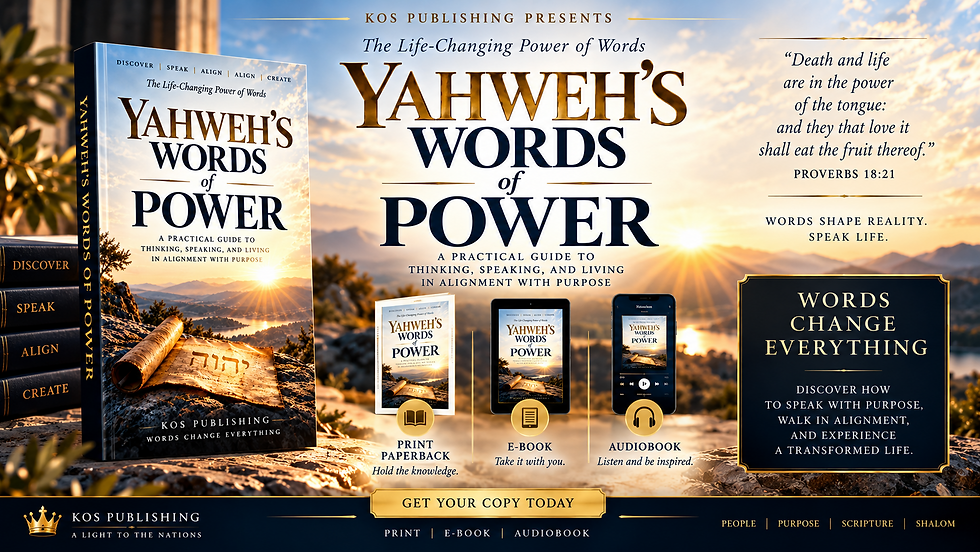
We also look forward to introducing Yahweh's Words of Power, a new book designed to help readers explore the power of His Word and deepen their understanding of the wisdom and instruction it contains.
More discoveries, new resources, and special announcements are ahead as we continue developing the work entrusted to us.
Visit Yahweh's Kingdom of Shalom
Our New Website Has Officially Launched!
A New Beginning. A New Experience. A Kingdom Growing in Knowledge, Wisdom, and Shalom!
The doors are open! We are excited to announce the official launch of the new Yahweh's Kingdom of Shalom website, a beautiful new home for learning, discovery, spiritual growth, and community.
Come and experience Yahweh's divine movement of knowledge, inspiration, renewal, and togetherness! Explore our new Yahweh's Bible School, discover inspiring teachings and meaningful insights through Yahweh's Storehouse Magazine, visit Yahweh's Bookstore and Learning Hub, and enjoy fresh lessons, Sabbath Gate Mysteries, and new discoveries arriving weekly.
This is more than a new website. It is a growing place of knowledge, connection, and opportunity, created to bring people together as we continue learning Yahweh's Word and walking in His ways.
Yahweh is on the move, and it's all happening at Yahweh's Kingdom of Shalom!
Come explore, subscribe, and become part of our growing community. There's a place for you as we learn, grow, and discover the wonderful things Yahweh is bringing forth.
The doors are open. The journey continues. Come grow with us in Yahweh's Shalom!
Stay Connected
Continue the journey with Yahweh's Kingdom of Shalom through weekly Sabbath Gate teachings, Scripture studies, music, new resources, and announcements.
Carry the Instruction Forward — Living in the Covenant
As we leave the 32nd Sabbath Gate, let us carry with us the understanding that the Sabbath is a teaching sign of the covenant, reminding us of the One to whom we belong. May we never become so familiar with the outward observance of the seventh day that we overlook the deeper knowledge Yahweh desires us to gain through His instruction.
May our minds remain open to learning, our hearts willing to receive understanding, and our lives prepared to demonstrate what we have been taught. May we recognize that belonging to the House of Yahweh involves more than knowing His name. It calls us to understand His presence, honor His covenant, and walk faithfully according to His instruction.
As we move toward the 33rd Sabbath Gate, may we continue growing in our understanding of the relationship Yahweh has established with His people. Let us remember that the house reveals belonging, dwelling reveals presence, and the Sabbath continually reminds us of the covenant sign through which Yahweh teaches His people to know Him.
Receive the instruction. Recognize the covenant. Understand your belonging. Walk faithfully in Yahweh's ways.
The Gate is open. See the sign. Understand the covenant. Recognize His presence. Live with your full spirit.
Remember: Live with Your Full Spirit.
Shabbat Shalom!
Peace and blessings from
Shabbat Shalom!
Yahweh rules, and we proclaim victory in Yahweh's name.
#KingdomOfShalom #Yahweh #ShabbatShalom #SabbathGateMystery #32ndSabbathGate #SabbathMysteries #Lamed #Beth #LamedPart3 #HebrewLetters #HebrewWordStudy #Lamad #DivineInstruction #TeacherAndStudent #HouseOfYahweh #YahwehsHousehold #FamilyOfYahweh #DwellingPresence #SabbathCovenant #CovenantRelationship #SabbathSign #ThatYeMayKnow #Exodus3113 #Ezekiel2020 #WisdomAndUnderstanding #SpiritualGrowth #YahwehsInstruction #WalkingInHisWays #Isaiah4319 #NewThing #YahwehsBibleSchool #YahwehsStorehouseMagazine #KingdomOfShalomLearningHub #SabbathRest #SacredTime #AppointedTimes #TheGateIsOpen #LiveWithYourFullSpirit #YahwehRules #VictoryInYahwehsName


Comments