
The 31st Sabbath Gate Mystery — Lamed, Part II: The Staff, the Shepherd, and the Calling


Lamed — Part II: The Staff, the Shepherd, and the Calling
The Mystery of Guidance, Instruction, and Preparation for Responsibility
Lamed and Aleph: The Strength to Carry the Staff
As we enter the 31st Sabbath Gate, we continue our journey through the mysteries of Lamed, the Hebrew letter with a numerical value of 30. At the 30th Sabbath Gate, we examined the transition from Kaph to Lamed and discovered the importance of instruction, learning, teaching, and the relationship between the teacher and the student. We recognized that receiving knowledge is only the beginning of understanding, and that the person called to teach must remain willing to be taught.
But as we move from the 30th Gate into the 31st Gate, something significant occurs within the numerical progression. We do not leave Lamed behind. Instead, we add another Hebrew letter to its numerical value. Lamed, representing 30, is now joined by Aleph, representing 1, bringing us to 31. Within our Sabbath Gate study, this introduces another dimension of the mystery, as Aleph is associated with the ancient pictographic image of the ox, which provides a symbolic foundation for exploring strength, power, and the capacity to carry responsibility.

At the 30th Gate, Lamed introduced the instruction. Now, at the 31st Gate, Aleph introduces the strength required to carry out the instruction. This is an important progression because knowledge alone does not necessarily prepare a person to fulfill responsibility. A person may understand what must be done and still need the courage, discipline, endurance, and inward stability necessary to accomplish it.
Consider the shepherd who carries the staff. The staff is an instrument of guidance, but the shepherd's responsibility extends far beyond the physical act of holding it. The shepherd must remain attentive to the flock, recognize danger, make decisions, endure difficult conditions, and continue providing direction even when the journey becomes challenging. The physical weight of the staff may be small, but the responsibility associated with carrying it can be great.
This is where Aleph introduces the mystery of strength beyond physical ability. Strength is not measured only by the power of the body. It is also revealed through the condition of the mind, the stability of the heart, the ability to endure difficulties, and the willingness to remain faithful when circumstances become demanding. A person may have considerable physical strength yet lack the patience, understanding, or mental fortitude necessary to guide others responsibly. Likewise, someone who does not appear physically powerful may possess remarkable inward strength, wisdom, perseverance, and the ability to remain steady under pressure.
Proverbs 24:10 declares, "If thou faint in the day of adversity, thy strength is small."
This passage directs our attention toward the strength revealed when difficulties arise. It reminds us that strength is not simply demonstrated when circumstances are comfortable. It is tested when responsibilities grow demanding, decisions are difficult, and the person must remain steady despite adversity.
Now consider Isaiah 40:29, which declares, "He giveth power to the faint; and to them that have no might he increaseth strength."
This passage shows that Yahweh is the source of strength for the weary. The person carrying responsibility is not expected to depend solely upon personal ability. Yahweh provides strength to those who recognize their need for Him.
This brings us back to the relationship between the teacher and the student. At the 30th Gate, we learned that the teacher must remain a student. Now, at the 31st Gate, we begin to recognize that the teacher must also develop the inward strength necessary to remain faithful to the instruction being taught. The shepherd must have the mental fortitude to keep learning, the humility to receive correction, and the courage to guide others according to Yahweh's Word rather than simply following personal preference or the pressures of those around them.
The strength to carry the staff is therefore more than the strength of the hand. It is the fortitude of the mind, the stability of the heart, and the faithfulness of the spirit. The hand may hold the staff, but the inward person must be prepared to carry the responsibility that comes with it.
This reveals why the addition of Aleph is so meaningful within our 31st Sabbath Gate study. Lamed introduces instruction and guidance, while Aleph introduces strength. Together, they provide a symbolic picture of the strength necessary to carry the instruction and responsibility entrusted to us. The student must develop the strength to remain committed to learning. The teacher must develop the strength to remain teachable. The shepherd must develop the fortitude necessary to guide others while remaining under the direction of Yahweh.
As we enter this 31st Sabbath Gate, we are invited to examine not only whether we possess knowledge, but also whether we are developing the inward strength to apply that knowledge faithfully.
Have we developed the patience to continue learning when understanding does not come immediately?
Do we possess the humility to accept correction when our understanding needs refinement?
Are we willing to remain steady when the responsibility entrusted to us becomes difficult?
And do we recognize that true strength includes the ability to remain faithful to
Yahweh's instruction even when circumstances challenge our resolve?
These questions prepare us to examine the staff, the shepherd, and the calling through a deeper understanding. The staff represents guidance, but Aleph reminds us of the strength required to carry the responsibility of guiding. The shepherd must possess knowledge of the path, but also the fortitude to remain attentive and faithful throughout the journey. The calling requires more than the desire to lead; it requires preparation, endurance, understanding, and a willingness to remain under Yahweh's instruction.
At the 30th Gate, we received the instructions.
At the 31st Gate, we begin learning the strength required to carry it.
And with this understanding, we now enter the mystery of the staff, the shepherd, and the calling.
The Staff — The Instrument of Guidance
The ancient association of Lamed with the ox goad introduces the imagery of directing movement. This leads us to examine the biblical significance of the shepherd's staff. Although an ox goad and a shepherd's staff are different instruments, both provide useful illustrations of guidance and direction. The ox goad was used to direct an animal in its work, while the shepherd's staff was associated with the care and guidance of the flock. Both instruments help us consider the importance of having direction and understanding the purpose of that direction.
Psalm 23:4 declares, "Yea, though I walk through the valley of the shadow of death, I will fear no evil: for thou art with me; thy rod and thy staff they comfort me."
In this passage, David describes Yahweh as his shepherd, with the staff as an instrument associated with His care.
The presence of the Shepherd provides comfort because the flock is not left without guidance, protection, or attention. The staff becomes an illustration of the support and direction provided by the One who leads.
A shepherd must understand the condition of the flock, the direction in which it must travel, and the dangers that may be encountered along the way.
The shepherd must also know when to move, when to stop, and how to guide those entrusted to his care.
The flock depends upon the shepherd's knowledge and attentiveness, particularly when the path is unfamiliar or danger is present. Without direction, the flock can scatter, become confused, or be exposed to circumstances it does not know how to navigate.
But there is something deeper worth considering. The staff does not determine the destination; the one holding the staff directs the journey. The instrument serves the purpose of the shepherd.
In the same way, instruction communicates direction, but the authority behind the instruction is greater than the instrument through which it is delivered.
When Yahweh gives His people instruction, He is not just giving us rules to memorize. He is revealing how we are to walk, how we are to conduct ourselves, and how we are to remain aligned with His ways.
Psalm 119:35 expresses this relationship through the request, "Make me to go in the path of thy commandments; for therein do I delight."
The psalmist is not just asking to know the commandments. He is asking to be guided in the path of those commandments. He desires that Yahweh's instruction direct his movement and influence his conduct.
See, knowledge must become direction, direction must become movement, and movement must remain aligned with the instruction. The purpose of learning is not fulfilled when a person can repeat what has been taught yet continues to walk in a direction contrary to that instruction.
This gives us an important connection between the staff and Lamed. The staff illustrates guidance, while instruction identifies the path that is to be followed.
Yahweh establishes the way His people are to walk, and His instruction provides the knowledge and understanding needed to recognize that way.
The staff guides our outward movement, while instruction gives us the power to guide our inward decisions that determine where and how we will walk. Before the feet can consistently follow the right path, the mind and heart must recognize and accept the direction being given.

The Shepherd — The Responsibility of Guiding Others
Now we move from the staff to the shepherd. The staff is an instrument, but the shepherd carries responsibility.
Remember, a shepherd must know where the flock is going, recognize danger, provide guidance, and remain attentive to the needs of those entrusted to his care. This responsibility requires knowledge, understanding, patience, discernment, and a willingness to serve.
A shepherd who does not understand the path may put the entire flock in danger, regardless of how confidently they carry the staff.
Instruction becomes essential because a person cannot faithfully guide others in a direction they do not understand.
How can someone teach what they have not taken the time to learn?
How can someone provide reliable guidance without understanding the instruction upon which that guidance is based?
And how can someone faithfully lead others in Yahweh's ways while disregarding His instruction in their own life?
These questions reveal why learning must precede responsible leadership.
Jeremiah 3:15 declares, "And I will give you pastors according to mine heart, which shall feed you with knowledge and understanding."
The word translated pastors refers to shepherds, and the passage identifies knowledge and understanding as essential provisions these shepherds are expected to give. Their responsibility is more than simply holding a position of leadership position. They must nourish the people with knowledge and understanding so they can learn to walk faithfully before Yahweh.
Notice that the passage does not describe shepherds who feed the people with position, recognition, or authority. It speaks of shepherds who feed them with knowledge and understanding. This is important because knowledge helps a person recognize what has been taught, while understanding helps that person comprehend its meaning and purpose. A teacher who provides information without helping the student develop understanding may leave the student dependent upon constant direction rather than prepared to walk responsibly.
This brings us directly back to Lamed and the relationship between teacher and student. The shepherd is not simply someone who stands before the people or carries an instrument of authority. The shepherd is entrusted with the responsibility of helping others understand the way they should walk. To fulfill that responsibility faithfully, the shepherd must remain a student of Yahweh's instruction. The responsibility to teach others does not place the teacher above the need to learn. Instead, it makes continued learning even more important.
An important distinction exists between holding a position of authority and having the understanding necessary to fulfill that responsibility. Authority may place someone in a position to lead, but knowledge, wisdom, discernment, and faithfulness to instruction influence how that leadership is exercised. The staff may be in someone's hand, but that does not automatically mean the person understands how to guide the flock. The ability to direct others must be supported by a willingness to remain under Yahweh's direction.
This reveals a spiritual principle: Before the hand can faithfully carry the staff, the heart must be willing to receive instruction. The person called to guide others must first learn how to be guided. The person entrusted with teaching must remain willing to be taught. The person responsible for directing others must understand the importance of remaining under the direction of Yahweh. When the teacher stops learning, the danger arises that personal understanding will begin to replace the instruction that was originally entrusted to them.
This is where our transition from Kaph to Lamed becomes particularly meaningful. Kaph introduced the imagery of the hand, while Lamed introduces the imagery of guidance and the relationship between teaching and learning. Within our Sabbath Gate interpretation, these images come together to illustrate a progression. The hand that received goodness must now become a hand prepared to serve responsibly, and that preparation begins with instruction.
The Calling — Preparation Before Responsibility
A calling is not simply about being selected to perform a task. It also involves preparing to carry the responsibility that comes with that task. There is a difference between recognizing that we have been entrusted with a responsibility and having the understanding necessary to fulfill it faithfully. Preparation allows knowledge to develop, understanding to mature, and discipline to become part of how a person responds to the responsibilities placed before them.
This is where the number 30 offers an additional biblical connection, particularly through the instructions concerning the Levites and their service in the Tabernacle.
Numbers 4:3 identifies those thirty and older, up to and over fifty, who were counted for the particular responsibilities described in that chapter.
Numbers 8:24, however, identifies twenty-five years old as the age for entering Levitical service.
These passages have been understood in different ways, including the traditional explanation that the earlier years were a period of preparation before assuming the fuller duties described in Numbers 4. The passages concern specific Levitical responsibilities and do not establish a universal spiritual rule that every person receives a calling at age thirty. Nevertheless, they provide a meaningful biblical example of the relationship between preparation and entrusted responsibility.
Consider what this means within our study of instruction. A person preparing for responsibility must first learn what the responsibility requires. The individual must become familiar with the work, understand the instructions that govern it, and develop the discipline needed to perform it faithfully. Without preparation, a person may possess enthusiasm but lack the understanding needed to fulfill the assignment.
The same principle applies to spiritual instruction. A student may be eager to teach others, but eagerness alone does not replace the need for knowledge and understanding. A person may desire to guide others, but that desire does not eliminate the responsibility to learn. The calling must be supported by preparation, and preparation requires instruction.
As we enter the 31st Sabbath Gate, this raises an important question concerning our journey through the previous gates.
What has Yahweh been teaching us, and how are we now being called to apply what we have learned?
Have we simply gathered information, or has that knowledge begun to shape our understanding, conduct, and relationship with Him?
Have we learned to recognize His goodness without fully understanding the responsibility that accompanies receiving it?
The Sabbath Gates have provided opportunities to examine the Word, discover the meaning of Yahweh's appointed times, and grow in knowledge and understanding. But knowledge carries responsibility. What we learn should influence how we live, how we treat others, how we make decisions, and how we respond to the instruction of Yahweh. If the knowledge remains disconnected from our conduct, we have not yet allowed the instruction to accomplish its intended work within us.
This is why the transition from the twenties to the thirties provides such a meaningful foundation for our study. The 29th Gate brought us to the revelation of Yahweh's goodness. The 30th Gate introduced Lamed and the importance of receiving instruction. Now, at the 31st Gate, we examine how that instruction prepares us to walk faithfully in what we have received. Receiving is not the end of the journey. It is part of the preparation for what comes next. The hand that received the goodness must now become willing to receive the instruction that teaches it how to serve.
The Lamed Portion of Psalm 119 — The Word That Establishes Direction
Before concluding this second part of our Lamed series, we must examine an important connection between Lamed and the Word of Yahweh. Psalm 119 is arranged as an alphabetic acrostic, with groups of eight verses corresponding to the twenty-two letters of the Hebrew alphabet.
The section associated with Lamed is Psalm 119:89–96, and its message provides a meaningful foundation for our exploration of instruction.
Psalm 119:89 declares, "For ever, O Yahweh, thy word is settled in heaven."

The Lamed section begins by establishing the enduring nature of Yahweh's Word. His Word is not unstable or dependent upon the changing opinions and desires of humanity. It is established, and His faithfulness continues throughout generations. This is important because instruction requires a reliable foundation. If instruction continually changes according to personal preference, it cannot provide a stable direction for those who are learning to follow it.
Consider the relationship between a foundation and the structure built upon it. A structure must rest upon something stable if it is expected to remain standing. If the foundation continually shifts, everything it supports becomes vulnerable to instability.
Similarly, the instruction we receive provides a foundation for how we understand, make decisions, and live our lives. When our understanding is rooted in the enduring Word of Yahweh, we have a foundation that is not dependent on ever-changing circumstances.
Psalm 119:90 continues, "Thy faithfulness is unto all generations: thou hast established the earth, and it abideth."
The psalmist connects Yahweh's faithfulness with the enduring order of His creation. The earth continues according to the order He has established, demonstrating that His faithfulness extends beyond a single moment or generation. This reminds us that Yahweh's instruction is not disconnected from His established order. His Word reveals His will, and His faithfulness provides assurance that He remains consistent in what He has declared.
In Psalm 119:92, the psalmist declares, "Unless thy law had been my delights, I should then have perished in mine affliction."
Here, Yahweh's instruction is presented as something that sustained the psalmist in times of difficulty. The Word was not simply information he possessed. It was something he valued, remembered, and relied on it during affliction. His relationship with the instruction influenced how he endured the circumstances before him.
The following verse,
Psalm 119:93, continues this testimony: "I will never forget thy precepts: for with them thou hast quickened me."
The psalmist recognizes the life-giving significance of Yahweh's precepts. Through the instruction he had received, he found something that sustained him and strengthened his life. This shows that instruction is not limited to outward actions that you see a person perform. It can also influence the inward condition of the person receiving it.
Here we begin to see an important connection between instruction and spiritual maturity. Yahweh's Word can shape our thinking, strengthen our understanding, guide our decisions, and provide stability during difficult circumstances. The instruction becomes more than something heard or memorized. It becomes something valued, practiced, and preserved within the person.
This is particularly meaningful when we consider the relationship between teacher and student. A teacher may communicate knowledge, but it means little if the student cannot apply that knowledge. A student may understand the words of an instruction yet still need to develop the discipline necessary to practice it consistently. The purpose of learning is more than storing information in the mind. It is to develop understanding that shapes our conduct and builds a stable foundation for life.
The Lamed portion of Psalm 119 therefore provides a fitting conclusion to our examination of the Hebrew foundation of the 31st Sabbath Gate. We began with the number 30 and the transition from Kaph to Lamed. We examined the relationship between learning and teaching, the staff as an illustration of guidance, the shepherd as one entrusted with responsibility, and the calling that requires preparation. Now Psalm 119 brings these concepts together by directing our attention to the enduring Word of Yahweh as the foundation of instruction.
The Word of Yahweh provides the foundation, instruction gives direction, understanding prepares us to follow, and obedience lets what we have learned become part of how we live. This progression continues to emerge through our examination of Lamed.
The Closing Revelation — Lamed and Aleph: The Strength to Carry the Staff
The 31st Sabbath Gate Mystery of the Staff, the Shepherd, and the Calling is solidified with the Strength to carry the staff.
As we come to the conclusion of this 31st Sabbath Gate Mystery, we must return to the Hebrew letters that opened this week's revelation. We began our journey at the 30th Sabbath Gate with Lamed, the letter associated with learning, teaching, instruction, and guidance. Now, as we enter the 31st Gate, Aleph joins Lamed, adding another dimension of understanding. Because Lamed carries the numerical value of 30, and Aleph carries the numerical value of 1, they bring us into the inner mystery of 31.
This combination creates a powerful link between instruction and strength, showing that receiving knowledge is only the first step of preparing to fulfill the responsibilities Yahweh has entrusted to us.
At the 30th Gate, we discovered that the teacher must remain a student, and the person receiving instruction must be willing to learn, understand, and apply what they are taught. But at the 31st Gate, we discover that instruction must be accompanied by the strength to carry it.
This gate teaches us that knowledge may reveal the path, but strength is required to remain faithful to that path when difficulties arise. It teaches us that understanding may reveal what must be done, but it takes fortitude to continue doing what is right when circumstances become challenging.
This is the deeper relationship we explore through Lamed and Aleph: the instruction that provides direction and the strength to follow it faithfully.
The ancient pictographic association of Lamed with the ox goad introduced us to an instrument used for guidance, while Aleph, associated with the ancient image of the ox, introduced the symbolism of strength and power. These images are particularly meaningful when considered together. The ox represents the capacity to carry weight and perform demanding labor, while the goad represents the direction necessary to guide that strength toward a particular purpose.
This image teaches us that strength without direction from Yahweh produces movement, but not the movement Yahweh intended. Also, direction without the strength to continue may leave the work unfinished. Through these symbolic associations, we discover an important principle: Strength must be guided by instruction, and instruction must be supported by the fortitude necessary to carry it out.
This brings us back to the staff and the shepherd. Throughout this week's teaching, we examined the staff as an instrument of guidance and the shepherd as the one entrusted with the responsibility of directing and caring for the flock. Yet the staff itself has no wisdom, understanding, or discernment. It does not recognize danger, choose the right path, or know when the flock should move or stay still. Those responsibilities belong to the shepherd. But the shepherd must possess more than the physical ability to hold the staff.
The shepherd must develop all the inner strength needed to carry all the responsibility the staff represents.
A shepherd may encounter difficult terrain, unexpected dangers, weary members of the flock, and circumstances that require patience and careful judgment.
The responsibility to guide does not disappear when the journey becomes difficult. In those moments, the shepherd must draw upon knowledge, understanding, discipline, and endurance. The ability to remain steady under pressure is just as important as the ability to recognize the direction the flock should take.
The strength to carry the staff is therefore not measured simply by the power of the hand, but by the fortitude of the mind, the stability of the heart, and the faithfulness of the spirit.
This is where Aleph brings another dimension to our understanding of the calling. A person may have considerable physical or other strengths but lack the qualities necessary to guide others. Someone may have knowledge of the Scriptures but struggle to remain steady when that knowledge is challenged. Another person may desire to lead but lack the discipline to keep learning, accept correction, or endure the responsibilities that accompany leadership. These examples remind us that the calling requires a kind of strength that reaches beyond outward ability. It requires inward preparation.
Consider Proverbs 24:10, which declares, "If thou faint in the day of adversity, thy strength is small."
This passage directs our attention toward the condition of our strength when circumstances become difficult. It is often easier to stay confident when everything goes according to plan, but adversity reveals whether we have developed the endurance to remain faithful when the path grows demanding. Mental fortitude means staying focused, disciplined, and committed to what is right even when pressures challenge our understanding, patience, or resolve.
Yet we must also recognize that spiritual strength is not simply the ability to endure through personal determination.
Isaiah 40:29 declares, "He giveth power to the faint; and to them that have no might he increaseth strength."
This passage reminds us that Yahweh is the source of strength for those who become weary. Those carrying responsibilities for Yahweh do not expect and are not expected to depend entirely upon their personal abilities. There will be moments when knowledge alone is insufficient, when experience does not provide every answer, and when the weight of responsibility reveals the limitations of human strength. In those moments, we must remember that the One who gives the instruction can also strengthen those called to walk according to it.
This brings us to an important distinction between strength and self-reliance. Mental fortitude does not mean refusing to acknowledge weakness, ignoring the need for rest, or believing that we must carry every responsibility without assistance. True fortitude includes the wisdom to recognize our limitations, the humility to seek instruction, and the willingness to depend on Yahweh rather than letting pride convince us we must have every answer. A shepherd who refuses correction endangers the flock, while a teacher who believes there is nothing more to learn may eventually substitute their personal understanding for Yahweh's instruction and Divine Order.
Therefore, the relationship between teacher and student remains essential as we explore strength and responsibility. The teacher must possess the fortitude to remain teachable. The student must develop the discipline to continue learning when understanding does not come immediately. The shepherd must possess the humility to recognize that the authority to guide others does not place them above the instruction of Yahweh. The strongest teacher is not necessarily the one who claims to know everything, but the one who remains firmly established in the truth while continuing to seek greater knowledge and understanding. This is Lamed.
Now consider the calling itself. A calling may reveal the responsibility entrusted to a person, but preparation develops the ability to carry that responsibility faithfully. We examined the Levitical service described in Numbers 4 and 8, in which different ages are identified in relation to entering and carrying out particular responsibilities. These passages remind us that sacred service involves order, instruction, and preparation. The responsibilities of the Tabernacle were not left to personal preference. Yahweh established instructions governing the work, and those entrusted with service were expected to understand and follow them.
This provides a meaningful connection between Lamed and Aleph. Lamed introduces the instruction that prepares us, while Aleph introduces the strength needed to carry the responsibility we are being prepared for. The calling requires both.
This is what we gain by accessing and passing through this 31st Sabbath Gate Mystery. It teaches us that without instruction, strength may be misdirected. Without fortitude, a person may understand the instruction, yet they may struggle to remain faithful when fulfilling it becomes difficult. But when knowledge, understanding, discipline, and strength are brought together under Yahweh's direction, we become better prepared to carry the responsibility entrusted to us.
And this brings us to the Lamed portion of Psalm 119, where the psalmist declares in verse 89, "For ever, O Yahweh, thy word is settled in heaven."
What a meaningful foundation for the strength we are discussing. Yahweh's Word is established, and His faithfulness endures throughout generations. Therefore, anyone seeking to remain steady must understand the importance of being grounded in something greater than changing circumstances, personal emotions, or the opinions of others. Yahweh's Word provides the foundation upon which understanding and faithful conduct can be established.
Psalm 119:92 continues,
"Unless thy law had been my delights, I should then have perished in mine affliction."
Here we discover a particularly meaningful relationship between instruction and fortitude. The psalmist does not describe a life without difficulty. He speaks of affliction yet acknowledges that delighting in Yahweh's Law sustained him through that experience.
The instruction became a source of stability when circumstances threatened to overwhelm him. His strength came not only from his ability to endure, but also from the value he placed on the Word that guided him.
This is one of the deeper revelations of the 31st Sabbath Gate.
Yahweh's instructions not only tell us where to walk; they also strengthen us to remain faithful as we walk.
His Word provides understanding in uncertainty, direction in difficult decisions, and a foundation on which our minds and hearts can remain established when circumstances become challenging. The strength we are exploring through Aleph is therefore connected to the instruction represented by Lamed.
But what does all of this reveal about the Sabbath itself?
We must remember that the Sabbath is an instruction from Yahweh, and through that instruction, He teaches His people to recognize His authority, remember His works, and honor the time He has sanctified.
The Sabbath also provides an appointed opportunity to cease from ordinary labor and return our attention to Yahweh. This becomes especially meaningful when we consider the mental and spiritual fortitude required to carry responsibility throughout the six days.
Because we carry many responsibilities, we must learn also how to recognize when Yahweh has instructed us to cease. The strength to fulfill a calling is not demonstrated through uninterrupted activity. It is also revealed through the discipline to honor the boundaries Yahweh has established. The shepherd must understand when to guide the flock forward and when rest is necessary. The teacher must recognize when to impart knowledge and when to become quiet enough to receive further understanding.
The person entrusted with responsibility must learn that faithfulness includes obedience to the instruction of rest. They must also realize that they are an example as a student who follows Yahweh's instruction.
This gives us another dimension of mental fortitude. Sometimes strength is demonstrated by the ability to continue, but at other times by the discipline to stop. It may require fortitude to set aside unfinished responsibilities, release the constant demands occupying the mind, and honor the Sabbath even when the activities of life seem to demand our constant attention. Yet through this instruction, Yahweh reminds us that our lives are not sustained solely by our own efforts. We must learn to trust the One who established the time for labor and the time for rest.
The Sabbath, therefore, provides an opportunity to strengthen the inner person through remembrance, instruction, reflection, and renewed attention to Yahweh. As we cease from ordinary labor, we can examine the condition of our minds and hearts. We can recognize where responsibilities have become burdensome, where our attention has become scattered, and where our priorities may require realignment. We can also remember that the One who has entrusted us with responsibility remains the source of the wisdom and strength necessary to fulfill it.
This brings together the staff, the shepherd, the calling, and the Sabbath into a single spiritual understanding. The staff represents guidance, the shepherd represents responsibility, and the calling requires preparation. Lamed introduces instruction, while Aleph introduces the symbolic dimension of strength. And the Sabbath provides an appointed opportunity to return to the One whose instruction guides us and whose strength sustains us.
As we conclude this week's teaching, we must ask ourselves whether we are developing the kind of strength necessary to carry what Yahweh has entrusted to us.
Are we strengthening our understanding through continued study of His Word?
Are we developing the mental fortitude to remain faithful when circumstances become difficult?
Do we possess the humility to receive correction, the patience to continue learning, and the discipline to honor His instruction even when our own desires or responsibilities pull us in another direction?
These questions are important because the staff represents more than an object held in the hand. It represents the responsibility of guidance. And the responsibility of guidance requires a person whose inward life is being shaped by the instruction of Yahweh.
The shepherd must not only know the path but also have the fortitude to remain faithful to it.
The teacher must not only communicate knowledge but also demonstrate the humility and discipline necessary to continue learning.
The student must not only receive instruction but also develop the strength to apply it.
At the 30th Sabbath Gate, we entered the mystery of Lamed and discovered the importance of becoming both the teacher and the student. At the 31st Sabbath Gate, Aleph has been added, and we now examine the strength needed to carry the instruction we have received. The transition reveals continued progress in our Sabbath Gate journey. We are not simply accumulating knowledge from week to week. We are examining how that knowledge prepares us to live, serve, guide, and remain faithful to Yahweh.
The 31st Sabbath Gate teaches us that the strength to carry the staff begins within the person who holds it. It is found in a mind committed to learning, a heart willing to receive correction, a spirit that remains faithful in adversity, and an understanding that recognizes Yahweh as the ultimate source of direction and strength.
The hand may carry the staff, but the mind must possess understanding. The shepherd may guide the flock, but the heart must remain submitted to Yahweh. The calling may introduce responsibility, but instruction and fortitude prepare us to fulfill it.
For the true strength of the shepherd is not simply the ability to carry the staff, but the wisdom, endurance, and faithfulness to remain under the guidance of the One who gave the calling.
And this is the revelation of Lamed and Aleph at the 31st Sabbath Gate:
Remember, Lamed is the instruction that gives us direction, and Aleph is the strength we receive from Yahweh that prepares us to carry that instruction out faithfully.
Join Us at the 32nd Sabbath Gate
As we conclude the 31st Sabbath Gate Mystery, we have discovered that the strength to carry the staff is not found in the hand alone, but in the fortitude of the mind, the stability of the heart, and the faithfulness of the spirit. Through Lamed and Aleph, we have explored the relationship between instruction and strength, recognizing that the one entrusted with guiding others must first remain willing to be guided by Yahweh.
But the journey through Lamed continues, and another dimension of instruction awaits revelation.
Join us next week as we enter the 32nd Sabbath Gate Mystery — Lamed, Part III: The Mystery of Instruction — The Teacher, the Student, and the Sabbath. We will examine the next Hebrew letter combination in our journey and explore the deeper relationship between Lamed and the Sabbath itself.
We will explore why the Sabbath is not only an appointed time when Yahweh's people receive instruction, but is also itself, instruction from Yahweh.
Together, we will examine the relationship between the Divine Instructor and His people, the purpose of the Sabbath as an appointed time of instruction. We will aslo discover the significance of Yahweh's declaration in Exodus 31:13, "that ye may know," and begin uncovering what Yahweh intended His people to understand through the Sabbath.
The 31st Gate has revealed the strength necessary to carry the instruction. The 32nd Gate will take us deeper into the purpose of the instruction itself.
The staff has been entrusted, the strength is being developed, and the instruction continues. The mystery has not ended; another Sabbath Gate is preparing to open.
Continue the Journey
As we continue our journey through the Sabbath Gates, we are reminded that every revelation opens another opportunity to grow in knowledge, wisdom, understanding, and spiritual maturity. The 31st Sabbath Gate has introduced us to the relationship between Lamed and Aleph, revealing the importance of possessing both the instruction that gives direction and the inward strength necessary to remain faithful to that direction.
As we move forward, let us remember that Yahweh's instruction does not simply prepare us to carry responsibility. It also teaches us how to remain steadfast when the journey becomes difficult. The teacher must remain a student, the shepherd must remain under the guidance of Yahweh, and the one who carries the staff must recognize that true strength comes from the One who established the calling.
The journey of learning continues, and the Word of Yahweh reminds us that the nations will come together to receive His instruction and walk in His ways.
Isaiah 2:2–3
“And it shall come to pass in the last days, that the mountain of Yahweh's house shall be established in the top of the mountains, and shall be exalted above the hills; and all nations shall flow unto it.
And many people shall go and say, Come ye, and let us go up to the mountain of Yahweh, to the house of the God of Jacob; and he will teach us of his ways, and we will walk in his paths: for out of Zion shall go forth the law, and the word of Yahweh from Jerusalem.”
Micah 4:1–2
“But in the last days it shall come to pass, that the mountain of the house of Yahweh shall be established in the top of the mountains, and it shall be exalted above the hills; and people shall flow unto it.
And many nations shall come, and say, Come, and let us go up to the mountain of Yahweh, and to the house of the God of Jacob; and he will teach us of his ways, and we will walk in his paths: for the law shall go forth of Zion, and the word of Yahweh from Jerusalem.”
A New Thing — New Beginnings, New Discoveries, and More!
Yahweh reminds us in Isaiah 43:18–19 to stay attentive to what He is bringing forth.
“Remember ye not the former things, neither consider the things of old. Behold, I will do a new thing; now it shall spring forth; shall ye not know it? I will even make a way in the wilderness, and rivers in the desert.”
Introducing Yahweh's New Bible School
Yahweh's Bible School is now open!
Continue growing in knowledge and understanding through the study of Yahweh's Word. Discover the wisdom of His instruction, explore the Scriptures more deeply, and strengthen your foundation for walking faithfully in His ways.
The 31st Sabbath Gate has reminded us that the responsibility to teach must always be accompanied by a willingness to learn. Whether you are beginning your journey of biblical understanding or continuing years of study, Yahweh's Bible School provides opportunities to develop knowledge and strengthen your understanding of His Word.

Visit Yahweh's Learning Hub
Continue your journey of discovery through Yahweh's Learning Hub, where books, Scripture studies, Sabbath teachings, and learning resources are brought together to support continued growth in knowledge, understanding, and spiritual maturity.
As we have learned through Lamed and Aleph, receiving instruction is the beginning of preparation, while applying that instruction requires understanding, discipline, and fortitude. The Learning Hub provides resources to help you continue exploring Yahweh's Word and carry what you have learned into your daily walk.
A New Thing — New Beginnings, New Discoveries, and More!

A New Thing. New Beginnings. New Discoveries. And More!
Crystal City Publishing is proud to present the premiere issue of Yahweh's Storehouse Magazine!
In this exciting first edition, you'll find beautiful photography, thoughtful reflections, practical encouragement, biblical insights, and our interactive Storehouse Discovery Challenge and Seek & Find—an opportunity to test what you've learned and continue exploring.
Every page is designed to offer something worth remembering, discussing, and putting into practice.
More than a magazine, Storehouse brings ancient wisdom into modern life. Yahweh's principles are not confined to the ancient world. They remain relevant to our lives, our decisions, and the world we are building today.
The Autumn 2026 Premiere Issue is available now!
Discover what's inside and get your copy at StorehouseMagazine.com.
Biblical Wisdom. Real Solutions. A Brighter Tomorrow.
As we continue through the Sabbath Gates, we are reminded to keep our understanding open to the knowledge and wisdom that Yahweh is revealing. What we have learned in the past provides a foundation, but it should never prevent us from continuing to examine Yahweh's Word and discovering greater understanding.
We look forward to introducing Yahweh's Words of Power, a book designed to help readers explore the power of Yahweh's Word and deepen your understanding of the wisdom and instruction it contains.
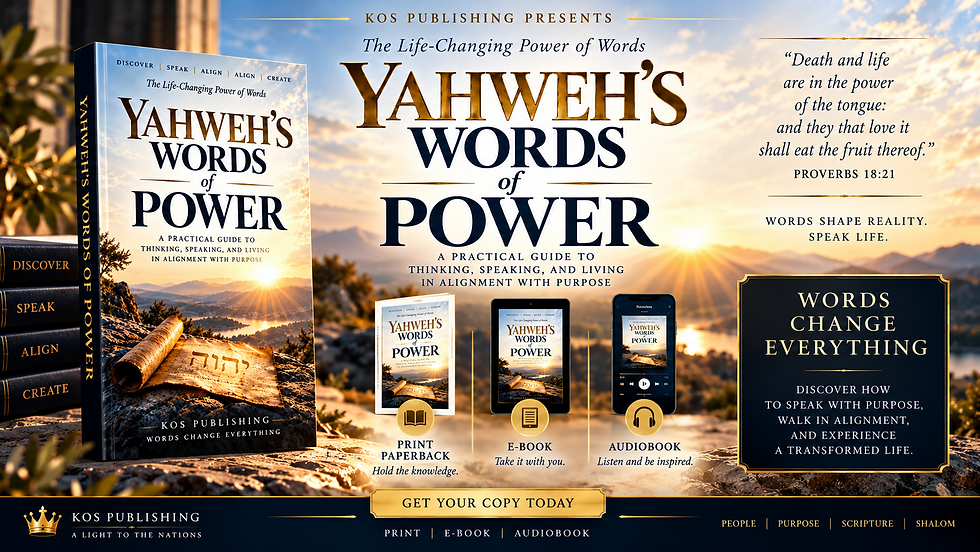
Something new is unfolding at Yahweh’s Kingdom of Shalom!
Visit the New Yahweh's Kingdom of Shalom Website
Come and experience Yahweh's divine movement of knowledge, discovery, renewal, and togetherness! Something wonderful is unfolding, and you're invited to be part of it.
Explore our new Yahweh's Bible School, discover inspiration and wisdom in Yahweh's Storehouse Magazine, visit the new Yahweh’s Learning Hub and Bookstore, and grow through fresh lessons and Sabbath revelations arriving weekly.
We will continue developing new resources, teachings, and opportunities designed to enrich your journey of learning and spiritual growth. There's always something new to discover at Yahweh's Kingdom of Shalom as we continue learning, growing, and walking in Yahweh's ways together.
More discoveries, new resources, and special announcements are ahead as we continue developing the work entrusted to us.
Yahweh is on the move, and it's all happening at Yahweh's Kingdom of Shalom!
Come explore, subscribe, and become part of a growing community united in knowledge, understanding, and the pursuit of Yahweh's Shalom.
Let Yahweh guide you as you discover the new things He is bringing forth!
Stay connected. Continue discovering. Yahweh is doing a new thing, and the journey continues!
Stay Connected
Continue the journey with The Kingdom of Shalom through weekly Sabbath Gate teachings, Scripture studies, music, new resources, and announcements.
Carry the Instruction Forward — The Strength to Remain Faithful
As we leave the 31st Sabbath Gate, let us carry with us the understanding that the strength to fulfill our calling begins with remaining faithful to Yahweh's instruction. May we never mistake physical ability for spiritual maturity, position for understanding, or the possession of authority for the wisdom necessary to exercise it faithfully.
May our minds be strengthened with fortitude, our hearts established in truth, and our spirits remain steadfast in the face of adversity. May we possess the humility to continue learning, the patience to receive correction, and the courage to walk according to what Yahweh has revealed, even when the path requires endurance and sacrifice.
Let us remember that the shepherd must remain under the guidance of Yahweh, the teacher must remain a student, and the one entrusted with the staff must recognize that the strength to carry it comes from the One who established the calling.
As we move toward the 32nd Sabbath Gate, may we continue receiving instruction with open minds, willing hearts, and a determination to apply what we have learned. Knowledge gives us understanding, instruction provides direction, and Yahweh gives us the strength necessary to remain faithful to His ways.
Receive the instruction. Develop the fortitude. Carry the responsibility. Walk faithfully in Yahweh's ways.
The Gate is open. Carry the staff with wisdom. Stand in the strength of Yahweh. Walk with understanding. Live with your full spirit.
Peace and blessings from
Shabbat Shalom!
Yahweh rules, and we proclaim victory in Yahweh's name.
Hashtags
#KingdomOfShalom #Yahweh #ShabbatShalom #SabbathGateMystery #31stSabbathGate #SabbathMysteries #Lamed #Aleph #LamedPart2 #HebrewLetters #HebrewWordStudy #Lamad #H3925 #StaffShepherdCalling #StrengthToCarryTheStaff #MentalFortitude #SpiritualStrength #YahwehsInstruction #TeacherAndStudent #ShepherdAndFlock #BiblicalWisdom #WisdomAndUnderstanding #SpiritualGrowth #Faithfulness #PreparationForCalling #Psalm119 #Isaiah4319 #NewThing #YahwehsBibleSchool #KingdomOfShalomLearningHub #SabbathRest #SacredTime #AppointedTimes #TheGateIsOpen #LiveWithYourFullSpirit #YahwehRules #VictoryInYahwehsName


Comments